
Outdoors, Together: Plan a Family Water-Play Day
A family afternoon outdoors does not need a packed itinerary. Choose one activity, prepare the space and make room for breaks. The aim is a day that works for the children taking part and the adults looking after them.
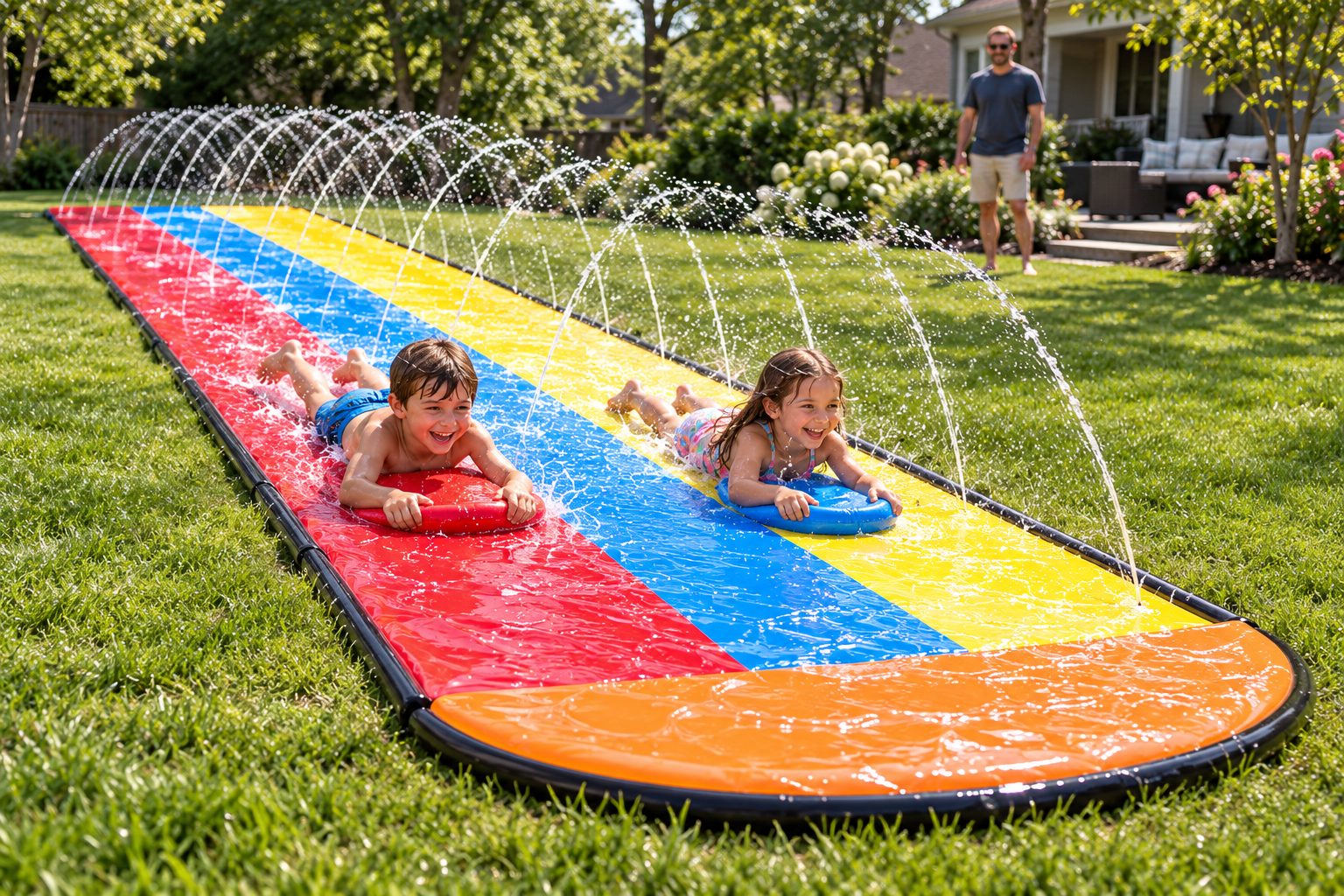
Start with what your family enjoys: a lawn game, a picnic, a nature walk or water play at home. Different ages may want different things. A quieter corner for a break can matter just as much as the main activity, especially when several children are sharing the space.
1. Match the activity to the people and place
Before choosing a water slide or outdoor toy, read the product’s intended-use description, age range, height and weight restrictions, and user limits. A garden slide, inflatable play structure and swimming pool are different products. Do not assume that instructions for one apply to another, or that a children’s product is suitable for adults.
Measure the usable space, including the clearance and landing or exit area required by the manufacturer. Consider where adults will stand, how children enter and leave, and whether the setup blocks a path. A product that fits on a lawn may still need more room to be used correctly.
2. Set up before the excitement begins
Check the product and all supplied parts against its instructions. Prepare the specified surface, remove sharp objects and keep the activity away from hazards. For inflatable play structures, follow anchoring and blower requirements, inspect for damage and stop use in unsuitable weather. Health Canada advises active adult supervision and following the manufacturer’s user and size limits.
Explain the rules before children start: how to take turns, where to wait and when to stop. Use only the sliding position and direction specified for that particular model. Do not improvise extra height, attachments or a different landing area.
- The exact model’s instructions are available and understood.
- The space, surface and clearances meet those instructions.
- Parts, seams, connections and any required anchors have been checked.
- A supervising adult can see and reach the activity area.
- Everyone knows the stop signal and where to take a break.
3. Make supervision a clear job
Agree which adult is actively watching; do not assume someone else is doing it. CPSC advises constant, undistracted adult supervision in and around water, alongside barriers that prevent unsupervised access to pools. Swimming lessons, toys and flotation products do not remove the need to supervise.
Build in time away from the activity for drinks, shade and a change of pace. A book, drawing materials or a simple picnic can help the afternoon feel complete without keeping the water play running continuously.
4. Finish the day with a proper pack-down
End the session while an adult is still managing the area. Follow the product’s instructions for draining, cleaning, drying, storage and preventing access when it is not in use. Health Canada specifically recommends fully drying inflatable water slides before storage. Note any damage so it is addressed before the next session.
Keep product names, model details and instructions together. They help you find replacement information and ask useful questions later. For first-aid preparation, choose supplies for your setting and seek suitable training; a kit alone is not an emergency plan.
Choose the next family collection with DYLAN
Share the children’s age range, available space, intended setting and product questions. For retailers or brands, tell us whether you need DYLAN products or a custom PVC and water-play project. Confirm the model’s instructions and relevant documents before ordering.
Health Canada: inflatable play structure safety · CPSC: pool-season safety advice. These resources address their stated product types; always follow the instructions for your own model.