Water Adventures
Snorkel Sets for Retail: Separate Fit Choices from Colour Choices
Build a clearer snorkel-set assortment by separating fit, colour and pack contents, using DYLAN DW-013 as a catalogue reference.
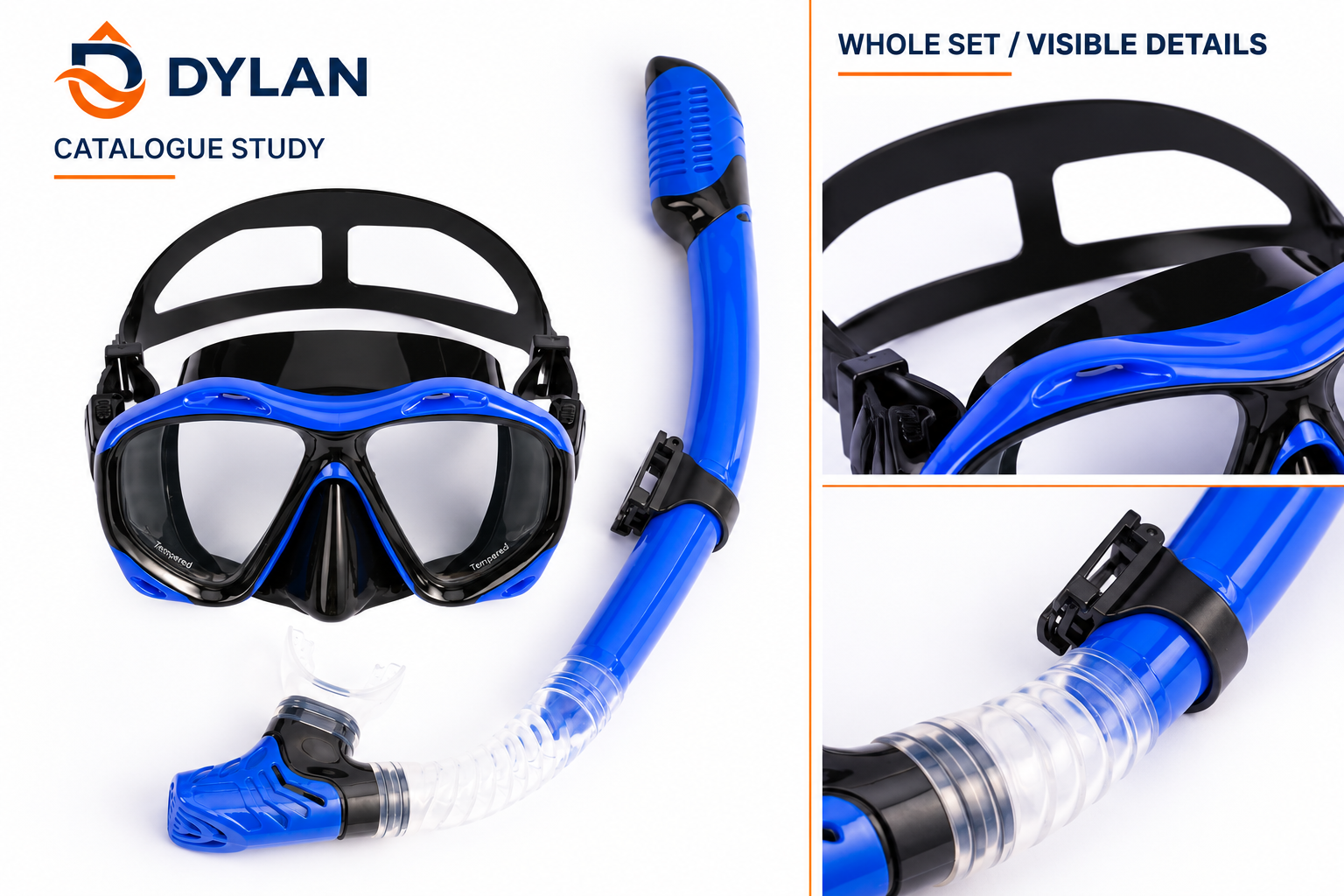
A retailer can offer several colours and still have a narrow snorkelling range. If each colour serves the same fit requirement, the display offers visual choice without necessarily helping more customers find a suitable set. For a distributor, that distinction affects how products are coded, sampled, described and reordered.
Start with the customer decision: which set is appropriate for the intended user, and which colour do they prefer once that choice is established? Keeping those questions separate produces a more useful assortment than treating every photograph as a different fit option.
What the current catalogue establishes
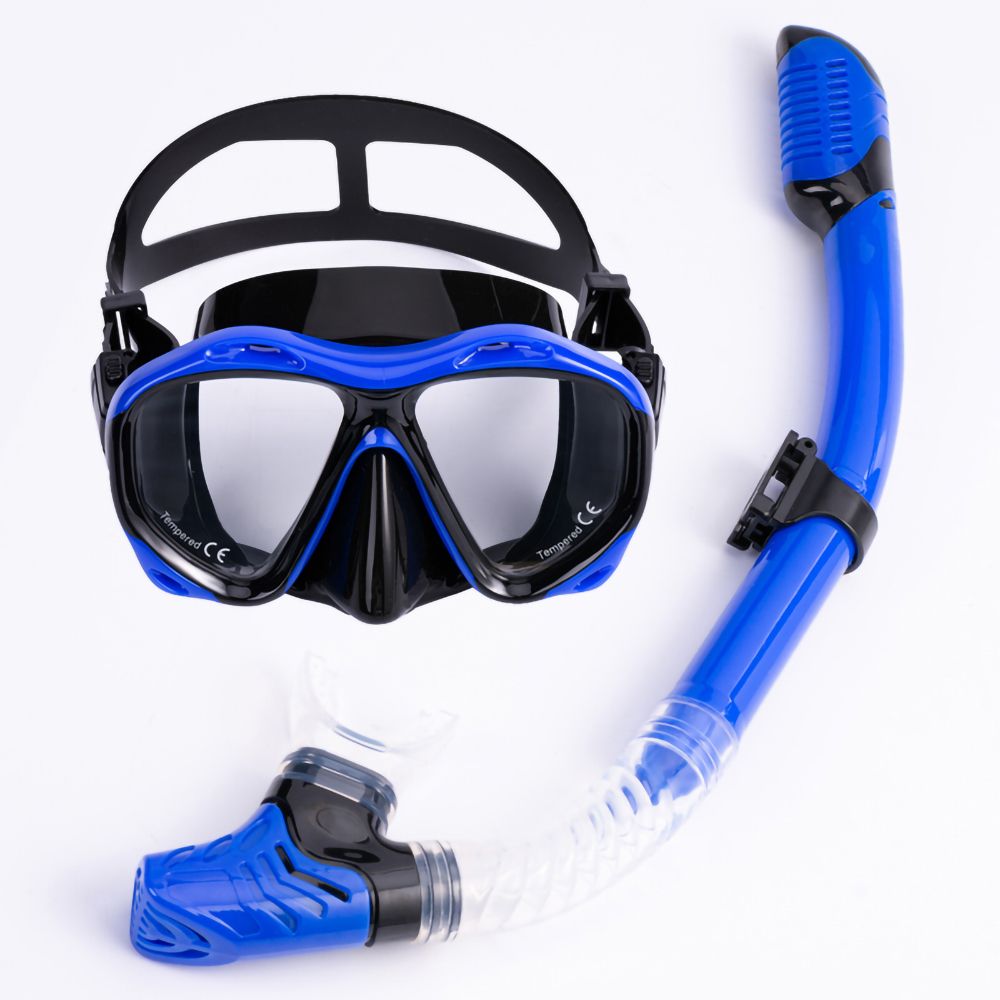
DYLAN lists DW-013 Mask & Snorkel Set — Blue Classic, also identified in SHOP as DYLAN Water Sports 013. Its public description confirms a separate mask and snorkel and an adjustable mask strap. Sizing and configuration remain matters for enquiry.
That is enough to place it on a buying shortlist. It is not enough to describe it as universal fit, assign an age range, or claim a particular lens material or valve function. Visible markings and the appearance of a component should not replace model-specific documentation.
Build the assortment around two separate decisions
First, establish the fit option
Ask for the intended-user guidance and the exact configuration attached to each proposed SKU. If a second model is intended to serve a different fit requirement, record what actually changes. An adjustable strap alone does not establish that one mask fits every face.
Use a sample review with staff who understand the manufacturer’s fitting instructions. Record observations and unanswered questions against the exact model, rather than giving an informal universal-fit approval. Do not turn a retail sample review into an unqualified in-water safety trial.
Then, decide the colour allocation
Once the fit options are clear, use your own customer requests and sell-through evidence to choose colours within each option. Where evidence is missing, treat colour demand as a question to test. Do not confuse the number of colour photographs with the number of confirmed fit choices.
| Assortment decision | Evidence to request | How to record it |
|---|---|---|
| Different fit option | Intended-user guidance and the dimensions or configuration that distinguish the model | A separate model record, with the supplier’s confirmed fit description |
| Different colour | Confirmation that the underlying model and configuration are unchanged | A colour variant linked to the same confirmed model |
| Different set contents | An itemised list of what the buyer receives | A separate pack definition; do not infer extras from a photograph |
| Different destination market | Applicable instructions, labelling and documentation for that exact item | A market-specific approval task before committing to the range |
Give each colour a record that can survive a reorder
The useful buying unit is not “the blue one”. Record the supplier model reference, your internal SKU, agreed colour name, fit description and pack contents together. This reduces the chance that a later quotation silently substitutes a similar-looking item.
A simple assortment sheet can use fit options as rows and colours as columns. Populate only confirmed combinations. Leave a blank where the supplier has not confirmed a combination; a blank is more useful than a guess that later appears on a purchase order.
Review sample presentation as well as the product
- Check that the model and colour on the proposed label match the sample and quotation.
- Confirm which pieces belong to the retail set and which are only photographic props, if any.
- Request the instructions and intended-user guidance that will accompany the final item.
- Record approved photographs and wording so the product page does not promise more than the supplier confirms.
Use early sales to refine the range
Track fit-related customer questions separately from colour preferences. A colour that sells slowly may need a different allocation; repeated fitting questions may indicate unclear product guidance or an assortment gap. Those are different actions. Combining them into one “poor-selling SKU” label makes the next buying decision less precise.
Keep reasons for exchanges in plain language and tied to the exact variant. Review the pattern before widening the colour range. For a new retailer without sales history, the first goal is a traceable selection and a way to learn, rather than an unsupported prediction of the best-selling colour.
Buyer questions
Does an adjustable strap mean one size fits all?
No. The public listing confirms adjustment, but does not establish a universal fit range. Ask for model-specific fitting guidance.
Are differently named colours interchangeable on a reorder?
Only after the supplier confirms the model, configuration and pack contents are equivalent. Retain both the original reference and the approved variant on the order.
Can DW-013 be ordered immediately at a published wholesale price?
The reviewed catalogue uses an enquiry process. Price, available configuration and commercial terms must be confirmed in the quotation.