Outdoor Field Guides
Camping Knots for Beginners: Useful Skills Around Camp
Learn which camping knots to practise, how to organise utility cord and what to check before using a guyline. A practical beginner camp-skills guide.
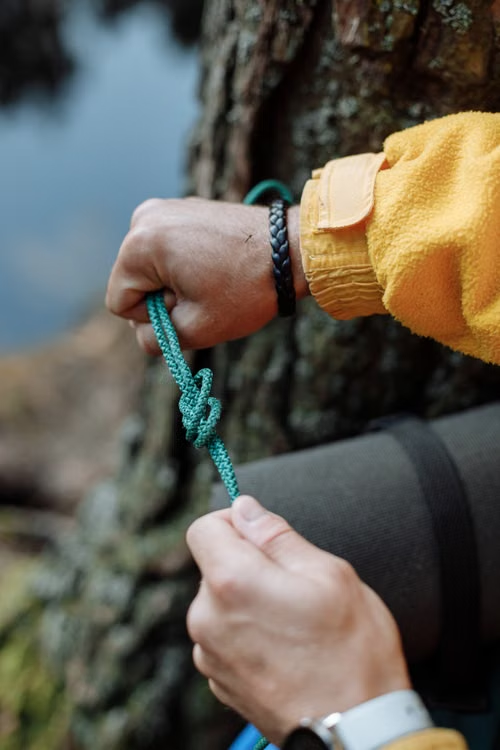
A short length of utility cord is more useful when you know what you want it to do. Camping knots for beginners are best learned through small, repeatable tasks: organising a loose cord, adjusting a suitable guyline or securing a light camp item. Start at home, where you can practise without wind, rain or fading light.
Match the knot to the task
A knot that creates a fixed loop has a different job from a hitch that adjusts along a line. Learn the names as a way to organise your practice, rather than as a collection to memorise. A bowline is commonly introduced for a fixed loop; a taut-line hitch is used for adjustment on suitable tent lines. Cord material and loading affect how knots behave. Follow your tent and cord manufacturer’s instructions.
Practise a complete cycle
Choose one task and use a reputable illustrated lesson or an instructor. Tie the knot slowly, compare its finished shape with the reference, then untie it. Repeat the same task on another day without rushing. Make a small practice card with the knot name, intended use and one limitation. Being able to undo a knot after use is part of the skill, especially when packing a wet shelter.
Check the cord as well as the knot
Before setting up, inspect the line for damage and confirm that it is suitable for the job. Arrange guylines so people can see them and avoid walking through them. Use designated attachment points and follow local rules about attaching anything to trees. Recheck the setup when conditions change. A neat-looking knot is not evidence that the whole system is suitable.
Keep camp skills separate from life-safety systems
These notes cover ordinary, low-consequence camp organisation only. Do not use a camp-knot article as instruction for climbing, abseiling, rescue, towing or suspending a person. Those activities need rated equipment, appropriate techniques and qualified instruction. If your shelter already has a purpose-made line adjuster, learning to operate it properly may be more useful than replacing it with a knot.
Frequently asked questions
Which camping knot should I learn first?
Begin with a knot that suits a real task in your camp setup. Learn its limitations and how to check and release it, then add another skill when the first is familiar.
Can I use any cord for a tent guyline?
No. Material, diameter and the tent’s attachment system matter. Use compatible lines and follow the tent maker’s setup guidance.
Continue your preparation
Browse the DYLAN Outdoor Field Guides for more ideas on route planning, packing and everyday trail skills.
Further reading: Scouting America — Basic Knots. Check current local guidance for your destination. These editorial notes support preparation and do not replace practical instruction or professional advice.