Water Adventures
Buying Dry Bags for Retail: Match the Product to the Promise
Build a dry-bag offer around packing, closure and documented use limits. Compare two catalogue options without turning a product photograph into a waterproof guarantee.
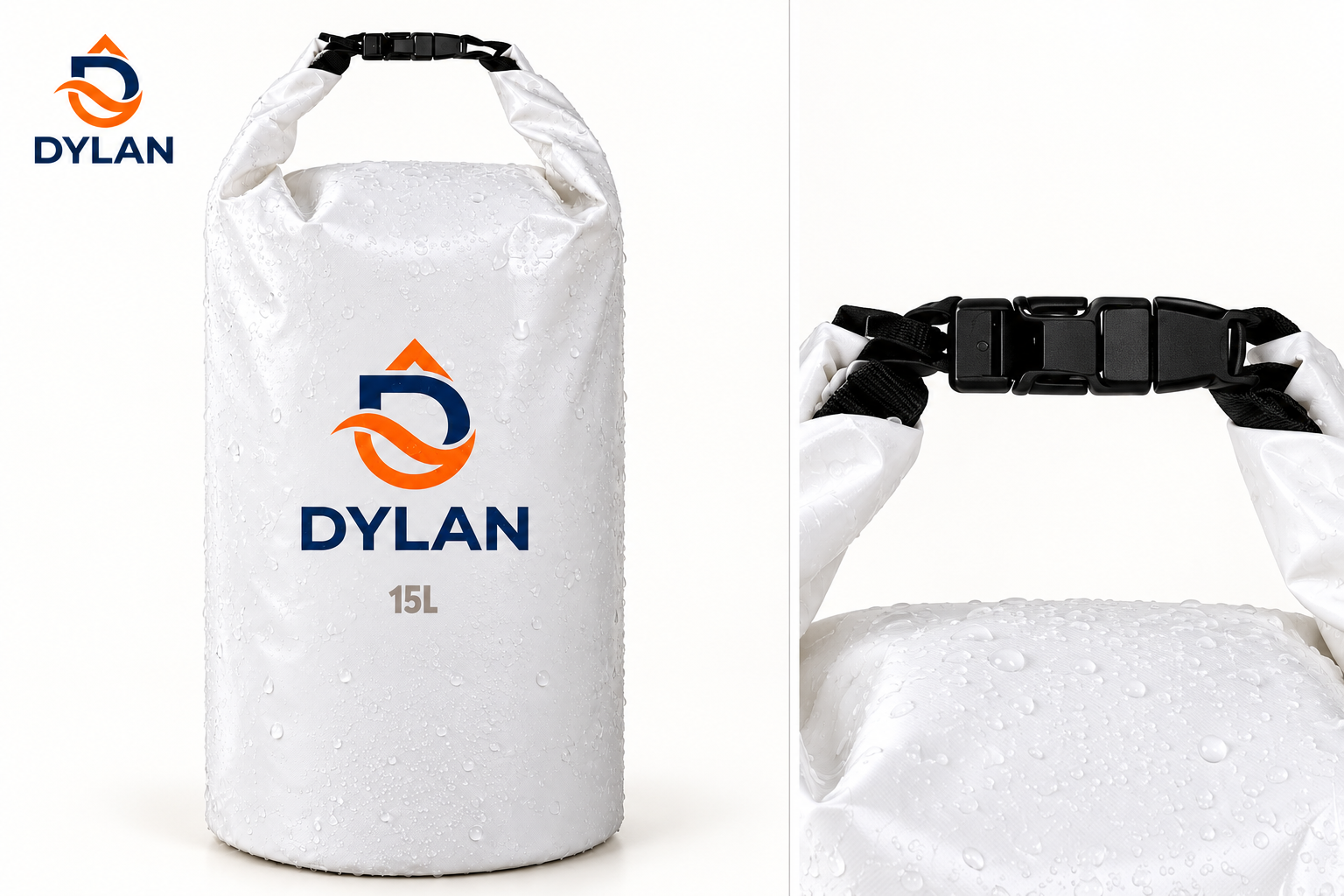
Brand presentation based on the DW-055 catalogue image. The inset illustrates the visible closure; it is not a test image or an engineering drawing. The printed 15L marking is subject to final specification confirmation.
A customer buying a bag for spare clothes on a paddle outing is making a different decision from someone looking for protection for electronics. For a retailer, putting both requests under one broad ‘waterproof bag’ label creates a question the photograph cannot answer. Begin with what the buyer wants to carry, how the bag will be handled and the exposure the selected model is documented to withstand.
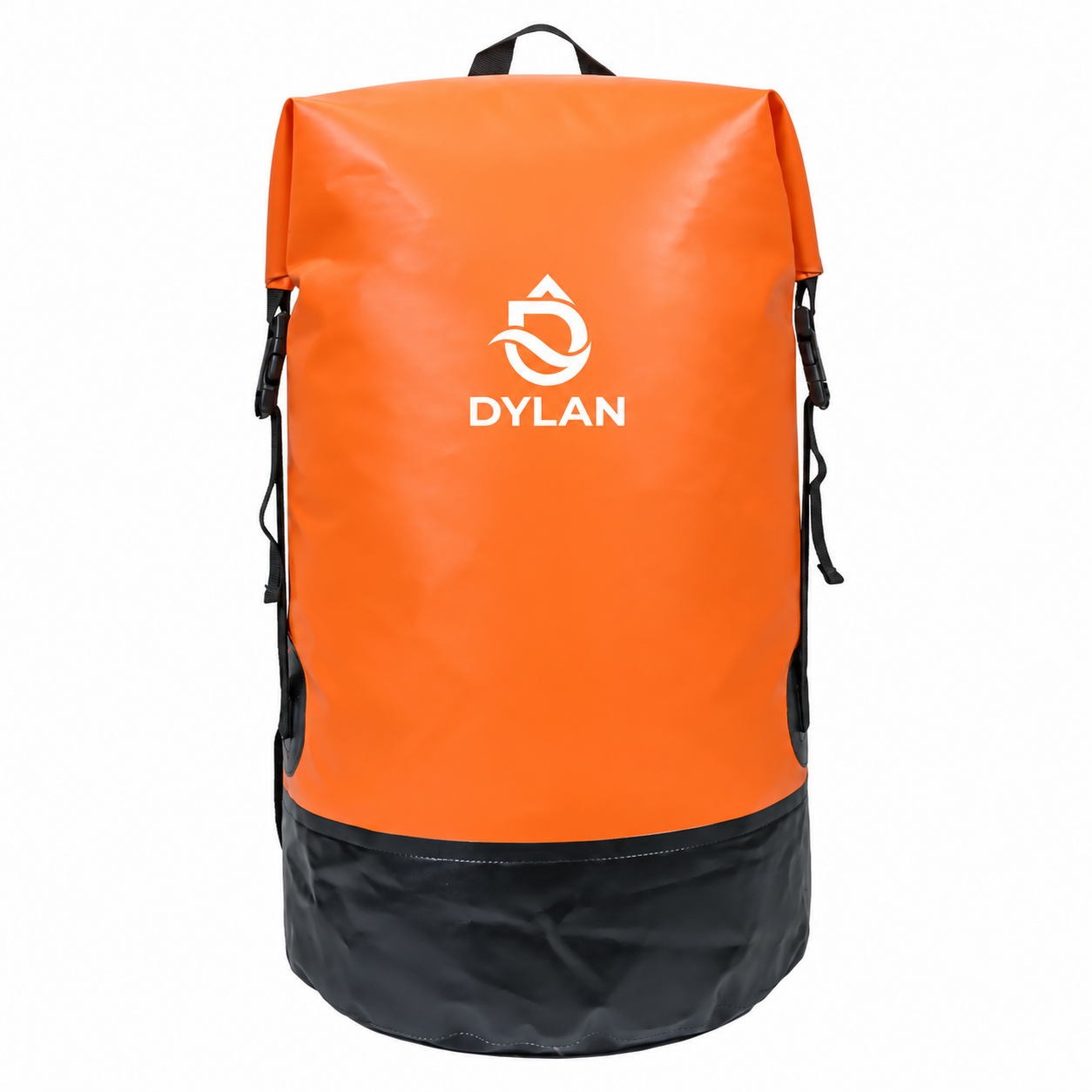
DYLAN’s water-sports collection currently lists the white Roll-Top Dry Bag, DW-055, and the orange-and-black Two-Tone Dry Bag, DW-060. They are starting points for an enquiry. Their pages ask buyers to confirm capacity, fabric and tested water-resistance specification; neither a colour nor a visible closure establishes that a bag is suitable for submersion.
Define the shelf promise before choosing the colour
Write one sentence describing the customer’s task. For example: ‘Organise a change of clothing for a day near the water.’ Then list the conditions that would have to be confirmed before making a stronger protection claim. Keep the task and the claim separate: a bag can be attractive and convenient to pack while its permitted water exposure still needs clarification.
Separate three buying questions
| Customer question | What the buyer should establish | What an image cannot establish |
|---|---|---|
| Will my belongings fit? | Usable capacity with the closure completed correctly, opening size and the actual packing load. | Usable volume from the bag’s apparent height. |
| Is it convenient to carry? | Included straps, adjustment range and handling with the agreed contents. | A load rating or long-term attachment strength. |
| What exposure is it intended for? | Written use limits, closure instructions and model-specific evidence for the proposed claim. | Submersion suitability from water droplets or the words ‘dry bag’. |
Compare the two catalogue options on what is actually shown
The white DW-055 is presented with a roll-top buckle and a 15-litre source format. The DW-060 listing describes a two-tone design, roll closure and side straps. Treat these as identifying details, not as a complete technical specification. If you plan to offer both, give them distinct reasons to exist in the range rather than presenting one as a more protective version without evidence.
Ask for the final model reference and artwork together. A colour sample, approved print file and production specification should describe the same bag. If a print option is discussed, confirm its placement, dimensions and approval process instead of assuming that every catalogue visual is a production-ready option.
Run a packing-and-closure review on the sample
Use representative, non-valuable contents for the handling review. The goal is to understand the buying experience and the instructions, not to improvise a certification test.
- Identify the sample. Record its model, colour, stated size, accessories and document version. Photograph the sample label so that later feedback refers to the right item.
- Pack the intended load. Check whether the opening is practical and whether enough material remains to close the bag according to its instructions. Record the contents used, not just ‘fits well’.
- Follow the closure instructions exactly. Ask a second colleague to repeat the process using only the supplied instructions. Note any ambiguity for the supplier to resolve.
- Review the carrying arrangement. Record which straps and clips are included and whether the supplied instructions explain their intended use. Do not turn a handling observation into a strength claim.
- Reconcile the listing copy. Keep any protection statement on hold until evidence and limitations for that exact model have been reviewed.
Make the retail listing useful without overpromising
A useful product page tells customers what is included, how to close the bag, how to choose a size and where to find care instructions. It also distinguishes a branding preview from the final supplied artwork. Avoid using a wet-looking product image as the main reason to believe a protection claim.
For a European retail rollout, plan the instruction language and customer-support information for the destination markets. Ask for the relevant product information and supporting documents during the commercial discussion. This article does not establish a regulatory classification or approval for either bag.
A practical approval record
- Model and colour match the sample and quotation.
- Capacity description and measurement basis are agreed.
- Closure and care instructions are available for the intended market.
- Included accessories and retail pack contents are listed individually.
- Each protection claim has a model-specific evidence reference and stated limits.
- Artwork is approved separately from performance claims.
Buyer FAQ
Does ‘roll-top’ mean the bag can be submerged?
No. It describes the closure style. Check the selected product’s instructions and documented exposure limits before making a submersion claim.
Can I use 15L as the final sales specification for DW-055?
The current catalogue calls it a 15-litre source format and the image carries that marking. Confirm the supplied model’s capacity and measurement basis before finalising packaging or listing copy.
Can we ask for a branded version?
The current page presents a custom-print preview. Send the required artwork and placement for discussion; available options, quantities and commercial terms must be agreed for the project.
Build a dry-bag enquiry around the intended sale
Open the white DW-055 listing and orange-and-black DW-060 listing. In SHOP, search DYLAN Water Sports 055 or 060 and choose sample or bulk quantities. Include the intended contents, destination market and proposed retail description. An enquiry begins the specification and quotation discussion; it does not place a paid order.