Water Adventures
Choosing Inflatable Kayaks for Retail: From Customer Scenario to Quotation
Choose inflatable kayaks for your retail range by matching customer scenarios, comparing model details and preparing a clear sample or bulk quotation request.
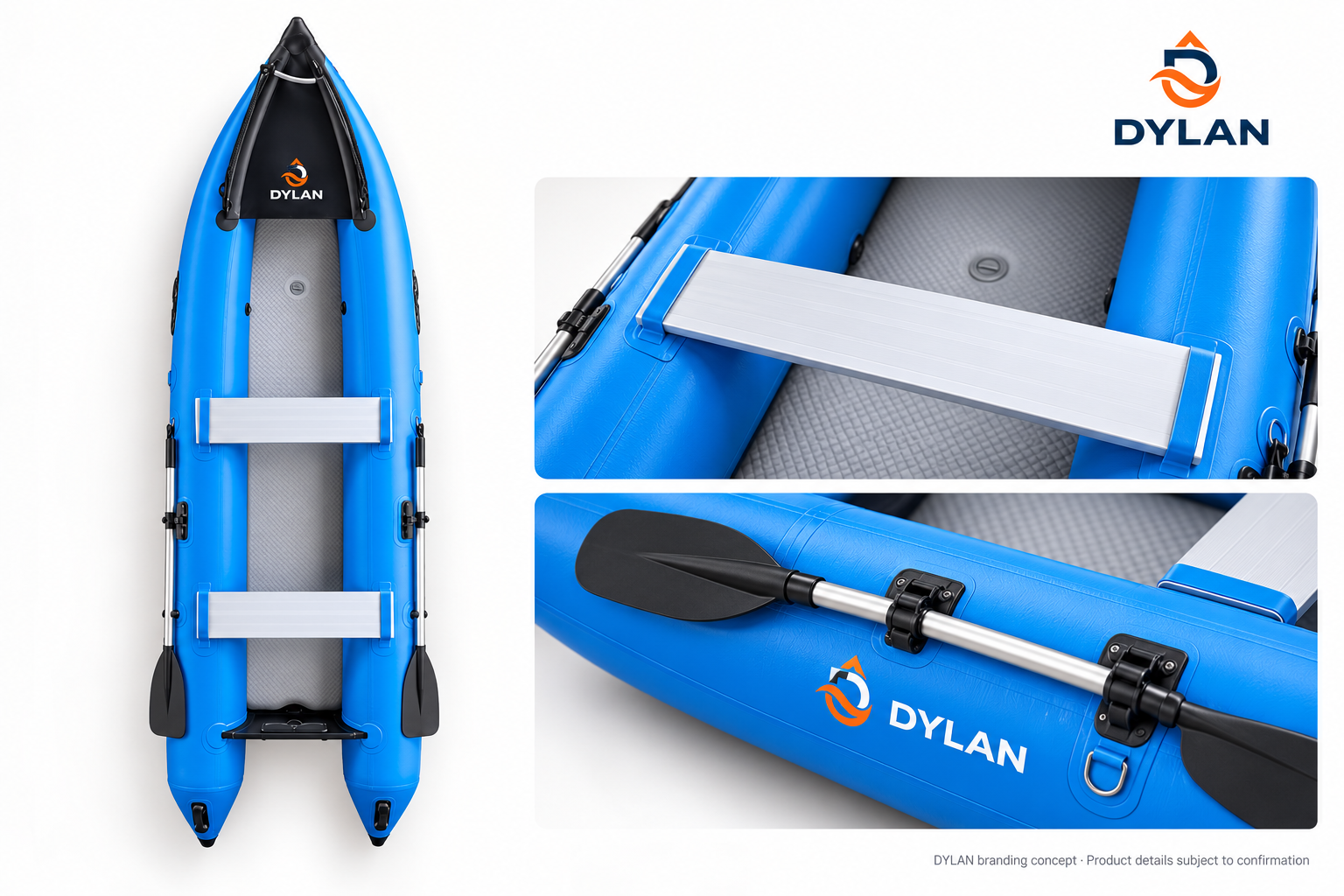
DYLAN branding visualisation based on catalogue imagery. Final specifications and logo placement are confirmed in your quotation.
A useful wholesale kayak enquiry starts with a clear product brief. Before asking several suppliers for prices, decide which specifications your retail team needs to compare and which details are still open. Otherwise, quotations can look similar while referring to different configurations, accessories or packaging.
For a retailer or distributor serving European customers, the brief should connect the product to your range: who you plan to sell to, where you plan to sell it, and what information you need before approving a model. This checklist helps you organise those decisions without treating an attractive photograph or a model name as a complete specification.
1. Define the model you want to compare
Start with the intended customer and product format. Are you looking for a compact recreational model, a tandem option, or an addition to an existing paddling range? Describe the use you want the supplier to assess. Ask the supplier to identify suitable models and explain any limitations; do not assume suitability from appearance alone.
Give each requested configuration its own reference. A different seat arrangement, floor construction or accessory package may need a separate comparison line. If you send screenshots, include the product link and model reference as well. Keep a dated copy of the specification you are discussing so later changes are easy to identify.
2. Turn product descriptions into specific questions
You do not need to decide every detail before making contact. Mark an unanswered item as “supplier to confirm” instead of filling it with an estimate. The following questions make a technical comparison more useful.
| Specification area | What to ask the supplier | What to record |
|---|---|---|
| Dimensions and weight | What are the inflated dimensions, packed dimensions and product weight? Which accessories are included in each measurement? | Units, measurement basis and exact configuration. |
| Seats and interior layout | What seating arrangement is supplied? Which seats or fittings can be adjusted or removed? | Included components and available options. |
| Materials and construction | What materials and construction are specified for the hull, floor and other inflatable sections? | Component-level descriptions rather than a single broad material label. |
| Inflation information | What inflation instructions, valve details and operating limits are provided for the exact model? | The supplier’s written instructions and matching component references. |
| Capacity and intended use | What capacity and use limitations does the supplier state, and what supporting product documentation is available? | Model-specific statements and documents to review. |
| Included equipment | Are paddles, seats, a pump, fins, a carry bag or other items included, optional or unavailable? | A named contents list for each package. |
| Replacement components | Which replacement parts can be ordered, and how are compatible parts identified? | Part references and the supplier’s proposed support process. |
| Retail presentation | What product labels, instructions, packaging artwork and product images are available? | Languages, file formats and responsibility for any changes. |
3. Compare complete configurations, not headline prices
Build a comparison sheet with one column per model and one row per specification. Keep the supplier’s wording beside your own requirement. This makes a difference visible without forcing unlike descriptions into the same category.
For example, if one proposed package lists a pump and carry bag while another only lists the kayak, leave the missing items marked “not confirmed”. Do not assume they are included, and do not treat the two package prices as directly comparable until their contents are clear.
Separate confirmed details from proposed alternatives. If a supplier offers a different seat, colour or construction, record it as another version rather than silently replacing your original request. Ask for the revised specification and commercial quotation to use the same version reference.
4. Include the information your retail team will need
Your purchasing team may understand a model from a conversation, but your sales, warehouse and customer service teams will need written information. Ask how the product, accessory package and replacement components will be identified on documents and packaging.
Name the European markets and languages you are considering. Ask which instruction and label versions are available, who prepares any additional translations, and when you can review them. Treat these as items to confirm for the chosen model and market; a generic catalogue description is not a substitute for the documents your business needs.
Also clarify image availability. Ask whether the photographs show the exact configuration being quoted, whether alternative colours are pictured, and what permission is provided for using those images in your shop or product listings.
5. Resolve gaps before approving the specification
A practical shortlist has three groups: requirements already confirmed, differences you can accept, and questions that still block a decision. This is more useful than declaring a model approved while important details remain in an email thread.
Before moving to the next purchasing step, check that the model reference, package contents, written specifications and proposed product information all describe the same version. Ask the supplier to explain inconsistencies in writing. Keep the final agreed document separate from earlier drafts so your team can tell what was actually approved.
Discuss your kayak specification with DYLAN
Browse the DYLAN boats and watercraft collection to identify product references for discussion. Then send your enquiry to DYLAN with the selected references, intended market and specification questions. If a detail is undecided, say so: a clearly marked question is a better starting point than an assumed specification.
Buying for a shop or rental fleet? Visit our inflatable kayak and SUP wholesale page to see the kayak and paddle board ranges we quote for shops and hire fleets.
Let’s define your next order.
Share your product references, quantity and destination. Review the details before confirming.