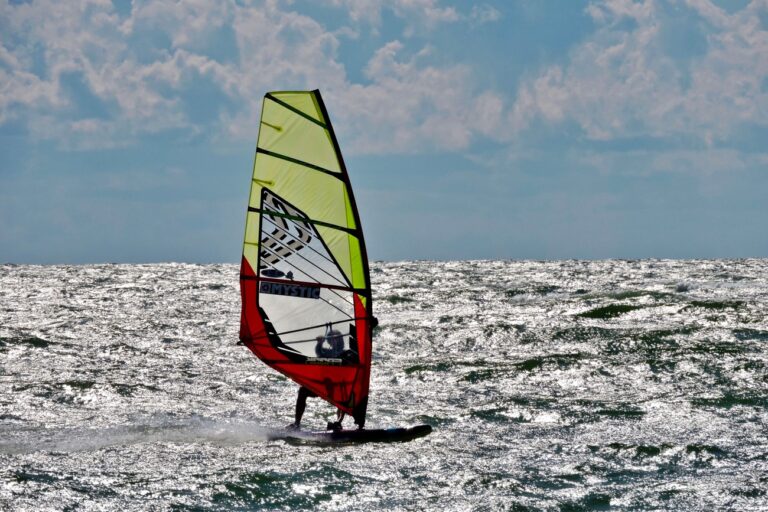
Windsurfing
Windsurfing Conditions for Beginners: Wind, Tides and Local Advice
Prepare for beginner windsurfing with local advice on wind direction, tides, access, session boundaries and a clear return plan agreed with your instructor.

Windsurfing conditions for beginners cannot be judged from a sunny beach alone. The direction of the wind, moving water and local access all affect the day. Choose instruction at a suitable venue and let the qualified team decide whether the session matches your current ability.
Understand why wind direction matters
Ask the instructor to explain the wind direction relative to the shore and the agreed practice area. Offshore wind blows away from land and can make returning difficult; beginners should not go out in offshore winds. Do not treat a single number from a forecast as permission to launch. Conditions must be assessed in the context of the site and the learner.
Include tides and moving water in the conversation
Where tides or currents affect the location, ask how they influence the session boundaries and return arrangements. A beach that looked straightforward earlier may change through the day. Check the centre’s local guidance and current notices. Do not assume that another person already on the water is following the same plan or has the same skill level.
Agree on boundaries before launching
Ask where you may practise, where you should avoid and how the instructor will tell you to return. Learn the help and communication procedure provided in the briefing. Confirm the appropriate buoyancy aid and other safety equipment for the activity with the centre. The RNLI highlights preparation, weather and tides, and suitable flotation in its windsurfing advice.
Be willing to change the session
If the instructor changes the plan, ask what that means for your lesson rather than trying to preserve the original itinerary. A shore-based session or another date may be the more useful option. Do not let travel costs or excitement push you beyond the agreed boundaries. End with a clear return and check-in routine so the team knows the session is complete.
Frequently asked question
Is a calm-looking surface enough to judge a beginner venue?
No. Wind direction, currents, weather changes, access and other local factors matter. Use qualified local advice and a supervised learning plan.
Further reading: RNLI — Windsurfer rescue and preparation advice.
DYLAN editorial planning guide. Learn with a qualified windsurfing instructor and follow local rules and the equipment manufacturer’s instructions.
Continue exploring
Learning to Windsurf: Building the Basics in Your First Sessions →
All Windsurfing articles → · Explore the Windsurfing field guide →