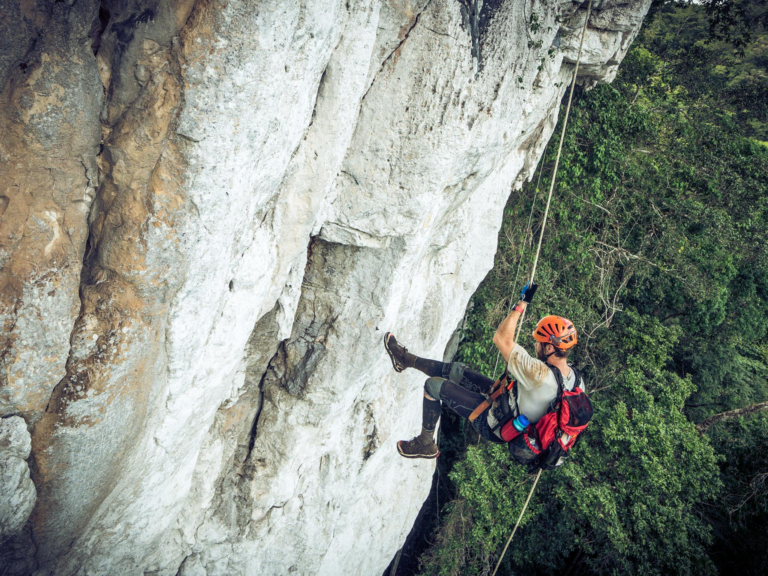
Rock Climbing
08: Plan the descent & know when to stop
Getting down is part of the route. Agree the finish, retreat option and emergency information before anyone starts upward.

Practical climbing guide 08 of 08. Getting down is part of the route. Agree the finish, retreat option and emergency information before anyone starts upward.
Use this preparation guide alongside qualified instruction. Rope-system checks are for trained climbers and belayers; beginners need instructor supervision.
Discuss the finish first
For a supervised top-rope session, confirm the lowering procedure with the instructor and belayer before climbing. Outdoors, ask who has the competence to assess the anchor and manage the planned descent. Do not assume a fixed anchor has been inspected by the land manager. Check the actual rope length and the route information; rope shrinkage or a changed route can make assumptions unreliable.
Make descent deliberate
Before lowering, use the agreed communication and confirmation. The belayer remains attentive and controls the brake-side rope using the correct device technique. A beginner should not untie, clean an anchor, rethread a rope or switch to abseiling based on an article. Those transitions require specific practical instruction. For bouldering, identify the descent holds and finish within your ability to get down using the venue’s taught procedure.
Write your stop conditions
Before leaving, agree a latest return time and what worsening conditions mean for the plan. During the session, reassess pain, fatigue, damaged gear, uncertain communication and weather. Stop before the next attempt when control or judgement is deteriorating. Stopping does not mean abandoning protection: remain secured and use the descent procedure you know.
Prepare information for help
Keep the crag or venue location, route name, access point and local emergency number available offline. Tell an emergency contact when to expect your return. If an incident occurs, maintain protection, alert staff or emergency services, and describe the location, people involved and problem. Do not attempt an improvised rescue beyond your training. Phone coverage and rapid rescue cannot be assumed.
Ready to continue?
You can explain the finish and the backup plan before starting.
Stop and reassess
Do not improvise anchor changes, rethreading or abseiling from written notes. If stuck or injured, maintain protection and seek qualified help.
References & demonstrations
- Petzl — Lowering
- Petzl — Rope too short: warning
- National Park Service — Climbing safety and trip planning
- Crux Climbing Center — Bouldering orientation
DYLAN editorial preparation series. Updated October 2026. Exercise examples should be adjusted to your ability; this is not a medical rehabilitation plan.