Swimming Safety
Family Water Safety: Children, Supervision and Safer Swim Days
Build a family water safety routine with clear adult supervision, swimming lessons, appropriate lifejackets and a simple handover plan.
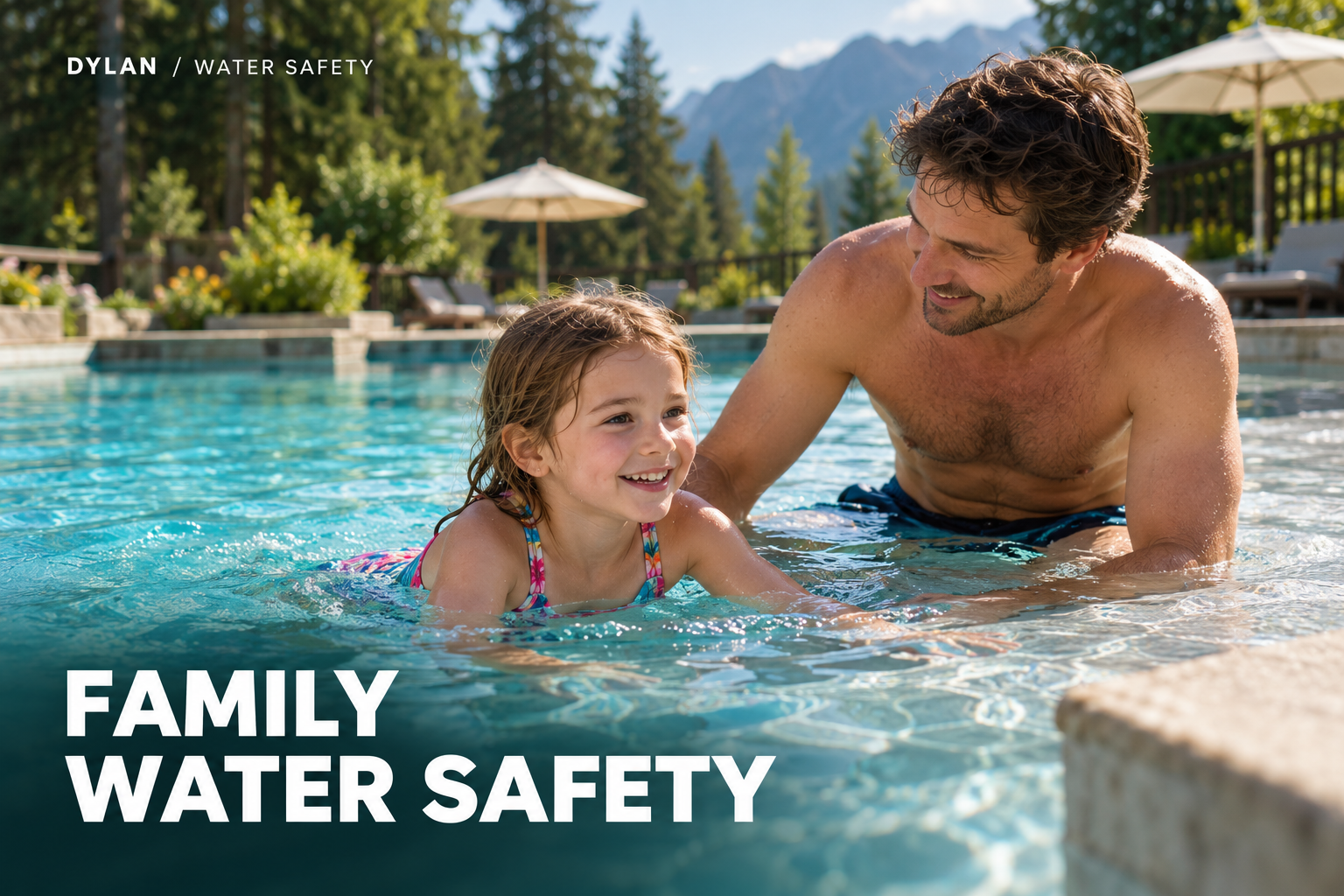
Family water safety works best when everyone knows who is responsible for what. A crowded pool party can feel well supervised while each adult assumes someone else is watching. Make the plan explicit before children approach the water, and revisit it whenever the group or location changes.
Name the adult who is watching
The American Red Cross advises close, constant attention to children in or near water, including when lifeguards are present. Avoid distractions such as phones. Young children and weak or inexperienced swimmers need an adult within arm’s reach. Another child should not be given responsibility for a young child’s safety.
Make handovers a conversation
At a family gathering, say who is taking over and wait for their acknowledgement. A practical phrase is: “You are watching these two children now; I am stepping away.” If the next adult is not ready, the current watcher remains responsible or everyone leaves the water. A timer or wristband can remind people of a turn, but it cannot provide supervision.
Plan ordinary interruptions too: a delivery, a meal, a conversation or a trip to collect towels. Discussing these everyday moments makes the arrangement easier to follow than a rule that simply says “be careful.” Keep the watcher’s task focused and make breaks possible through an explicit handover.
Use several layers of protection
Swimming lessons are valuable but do not remove the need for supervision. Use appropriate, correctly fitted approved lifejackets where needed, and remember that inflatable toys and arm bands are not life-saving equipment. Prevent unsupervised access to pools and other water around the home. Follow local requirements and professional advice for barriers and gates.
Prepare children for this particular visit
Explain the meeting place, permitted area and how to ask an adult before approaching the water. Use a short conversation suited to the child’s age and understanding. Avoid treating agreement with a rule as proof that a child can manage the risk independently. Adults still need to organise and maintain protection.
After the visit, invite questions without making the conversation a test. A child who says an activity felt uncomfortable has given you useful information for the next lesson or outing. Share that information with the instructor where appropriate.
A family swim-day checklist
- We have identified the supervising adult and the handover arrangement.
- We know the designated swimming area and site rules.
- Any lifejackets needed for the activity fit the individual wearer.
- We know where to find help and how to describe our location.
- We have a clear plan for leaving the water together.
Frequently asked questions
Does a lifeguard replace parental supervision?
No. Lifeguards provide an important layer of protection, while caregivers still need to watch the children in their care.
Can a child who attends lessons swim independently?
Lessons alone do not answer that question. Ask the instructor about demonstrated ability and supervision needs for the specific environment.
Sources and further learning
Educational reading from DYLAN. This article does not replace swimming lessons, rescue training or CPR certification. In an emergency, contact local emergency services. Cover image: AI-generated editorial illustration, not a technique demonstration.