Swimming Safety
Floating and Self-Rescue: A Practical Water Safety Guide
Understand floating and self-rescue, learn the RNLI Float to Live message and plan supervised practice before swimming outdoors.
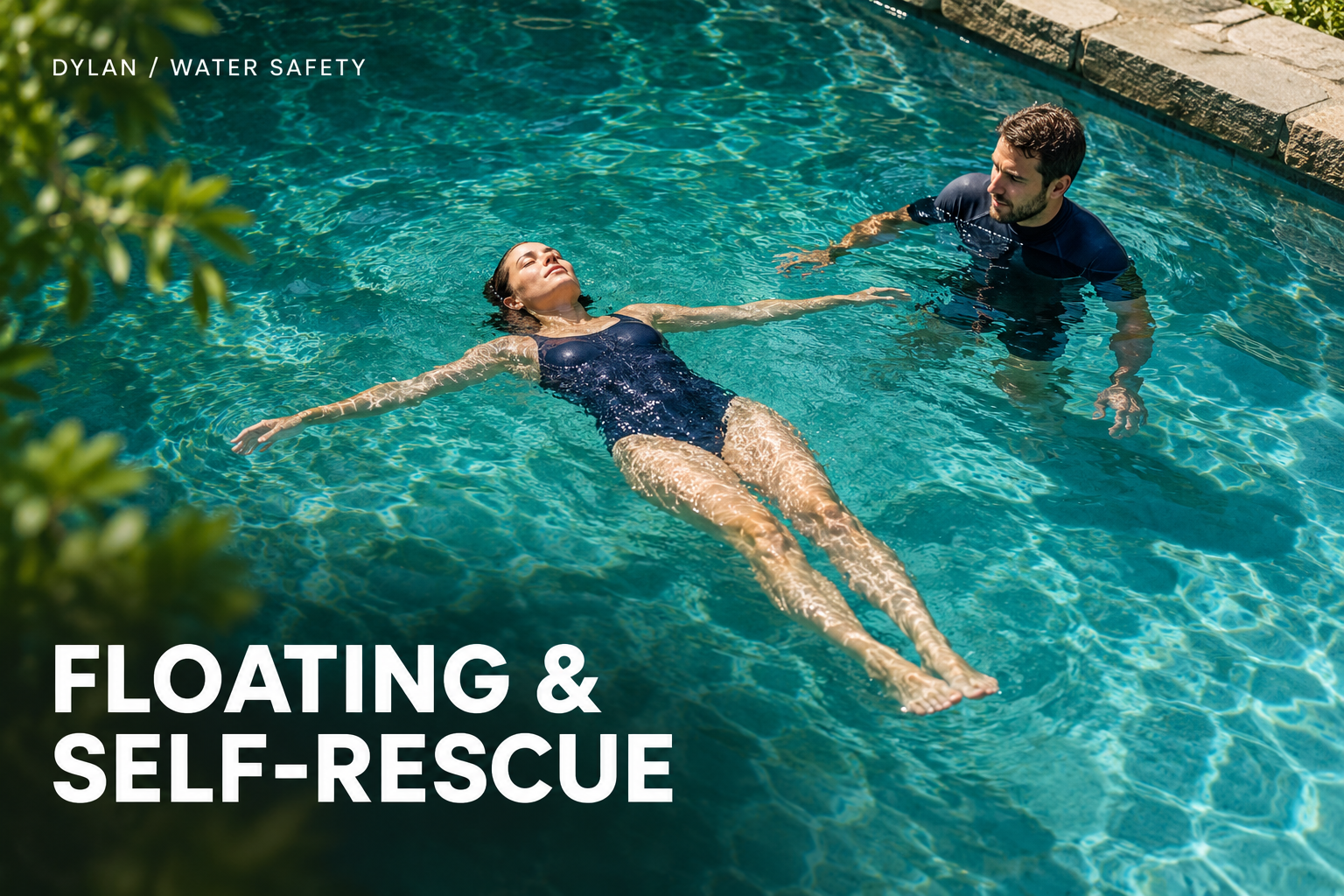
Floating and self-rescue belong in your swimming education before a difficult moment occurs. Being able to stop moving forward, settle your breathing and consider what to do next is different from simply swimming further. Treat this article as preparation for a conversation with an instructor, not a substitute for practical teaching.
Understand the Float to Live message
The RNLI advises tilting your head back with your ears in the water, trying to relax and controlling your breathing. Gentle movements of the hands and legs can help you stay afloat. Spread your limbs for balance and remember that legs may sit lower: people float differently. Once breathing is controlled, call for help or swim to safety if you are able. Practise in a supervised location such as a swimming pool.
Build confidence before you need the skill
Tell your instructor what feels unfamiliar. Some people dislike the sensation of water around their ears; others feel uncertain when their feet leave the bottom. Naming the difficulty helps the instructor choose suitable support. Ask how to move into and out of a floating position, how to regain an agreed safe position and when to stop an exercise.
A useful practice record has three lines: what you tried, what support was provided and what you want explained again. It should describe the lesson rather than award you a self-rescue certificate. A comfortable moment in a warm pool is encouraging, but it does not recreate an unexpected immersion outdoors.
Do not turn floating into an endurance challenge
Keep the purpose of supervised practice clear. The aim is familiarity and control, not a longest-float contest or a reason to venture further from safety. Avoid trying the skill alone in deep, cold or moving water. Do not ask a friend to surprise you by pushing you in. Planned learning should never depend on creating a real emergency.
Connect the skill to your swimming plan
Before a swim, identify an exit and ask the local lifeguard about the designated area. Discuss how your buddy will recognise that you want to finish. If the conditions or your ability do not match the activity, change the plan before entering. Floating is one useful skill within a wider approach that includes supervision, suitable conditions and knowing how to summon help.
Questions to take to your instructor
- What support would help me feel comfortable on my back?
- How should I return to the wall or another safe position?
- Which parts of this practice are suitable for my current ability?
- What additional teaching would I need before swimming outdoors?
Frequently asked questions
Do sinking legs mean I cannot float?
Not necessarily. The RNLI explains that people float differently and that legs may be lower. Ask an instructor to help you find a stable position.
Does floating make every swim safe?
No. A single skill cannot remove the risks of cold, currents, fatigue or an unsuitable location. Keep your wider safety plan in place.
Sources and further learning
Educational reading from DYLAN. This article does not replace swimming lessons, rescue training or CPR certification. In an emergency, contact local emergency services. Cover image: AI-generated editorial illustration, not a technique demonstration.