Skiing
03. Ski Warm-Up Exercises and a Balanced Beginner Stance
A ski warm-up is a gradual transition from travel to movement. Prepare on a stable surface, use comfortable movement ranges and start skiing on easy terrain with an instructor watching your balance.
DYLAN / PRACTICAL SKIING GUIDES
A ski warm-up is a gradual transition from travel to movement. Prepare on a stable surface, use comfortable movement ranges and start skiing on easy terrain with an instructor watching your balance.
For beginner alpine skiing on open, managed resort slopes. Use these notes alongside a qualified instructor; they are not a substitute for an on-snow lesson.
1. Start before the first descent
Long travel and time standing in a rental queue are not the same as preparing to ski. Set aside a few unhurried minutes after getting dressed. Choose level, non-slippery ground with room around you and keep clear of the lift queue and piste traffic. Warm-up movements should make the start of the session feel easier, not become a workout.
Begin with comfortable walking or marching for around three to five minutes. Keep the effort easy enough to talk. If boots or the surface make this awkward, ask your instructor for a suitable alternative rather than forcing an exercise into an unsafe space.
2. Mobilise gently, without chasing a stretch
Move the shoulders through small circles, then try a few shallow bends through the hips and knees while staying balanced. In ski boots, ankle movement is limited; use only the movement the boot comfortably allows. Keep each repetition smooth. Avoid bouncing, deep forced positions or twisting a planted knee.
A short sequence might be five comfortable repetitions of each movement, followed by a check of how you feel. That is an example to discuss with your instructor, not a prescription for every body. More repetitions are not automatically better. Adapt around previous injuries with appropriate professional advice.
3. Find a stance that can move
On the flat with your instructor, place the feet roughly hip-to-shoulder width apart, soften the ankles, knees and hips, and keep the weight centred over the feet. Let the shins make gentle contact with the front of the boots. Hold the hands comfortably forward and look ahead. Avoid sitting back or locking the legs straight.
Ask the instructor to check this position from the side. A useful question is: “Can I make a small movement and return to balance?” The goal is a responsive stance, not a rigid pose held for an entire run. Equipment fit and fear can both affect posture, so describe what you feel instead of trying to force a picture-perfect shape.
4. Finish the warm-up with easy skiing
Use short, low-speed practice in the teaching area before attempting a longer descent. Focus on one cue at a time, such as looking ahead or relaxing the shoulders. Check again after a long lift ride or an indoor break, when you may feel stiff or cold.
Do not use warm-up as proof that you are protected from injury. It is one part of preparation alongside suitable terrain, instruction, equipment checks and rest. If your legs already feel tired, reduce the session rather than adding more exercises to “wake them up”.
Your next-session checklist
- Raise your temperature with a few minutes of easy walking or marching in a safe, level place away from moving skiers.
- Add gentle shoulder rolls and small, controlled bends through ankles, knees and hips; keep the movements comfortable.
- With your instructor, find a centred stance, then use short easy glides to check balance before increasing the challenge.
Ready check: You feel warm rather than tired, can breathe comfortably and can make small balanced movements without pain.
Stop and reassess: Stop for sharp pain, dizziness, unusual breathlessness or instability. If you are unsure what exercise is suitable for a health condition or injury, seek individual advice.
Common questions
Is stretching enough before skiing?
Use a gradual active warm-up and easy skiing rather than relying only on a held stretch. Any stretching should stay comfortable and suit your own needs.
Should the warm-up hurt?
No. Pain is a reason to stop and reassess. An instructor can adjust the session, while persistent symptoms or an injury need appropriate healthcare advice.
Sources and further learning
Published 26 October 2026. Editorial preparation notes compiled from the resources above; no personal coaching or medical assessment is implied.
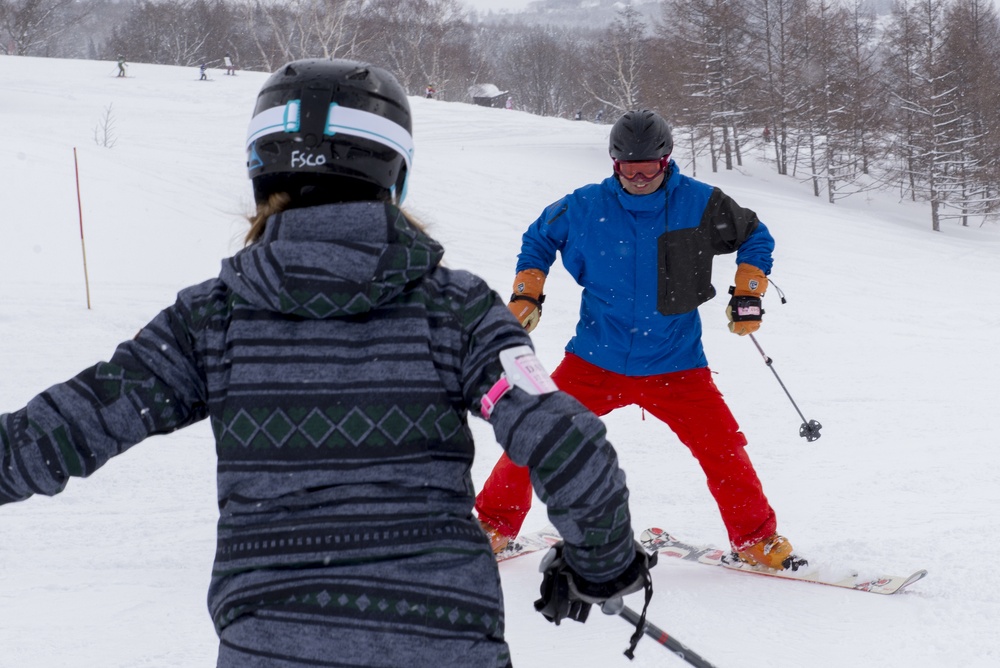
Learn with feedback. Photo: Donald Hudson / U.S. Air Force, public domain. Topic illustration, not a warm-up demonstration. Photo source.
Explore all 6 skiing guides ↗ · Skiing BLOG ↗
Continue learning: 04. How to Stop on Skis and Start Snowplough Turns ↗