Swimming Safety
Swimming Tips for Beginners: Build Skills and Safer Habits
Start swimming with confidence: choose lessons, practise essential pool skills and build a simple safety routine before every swim.
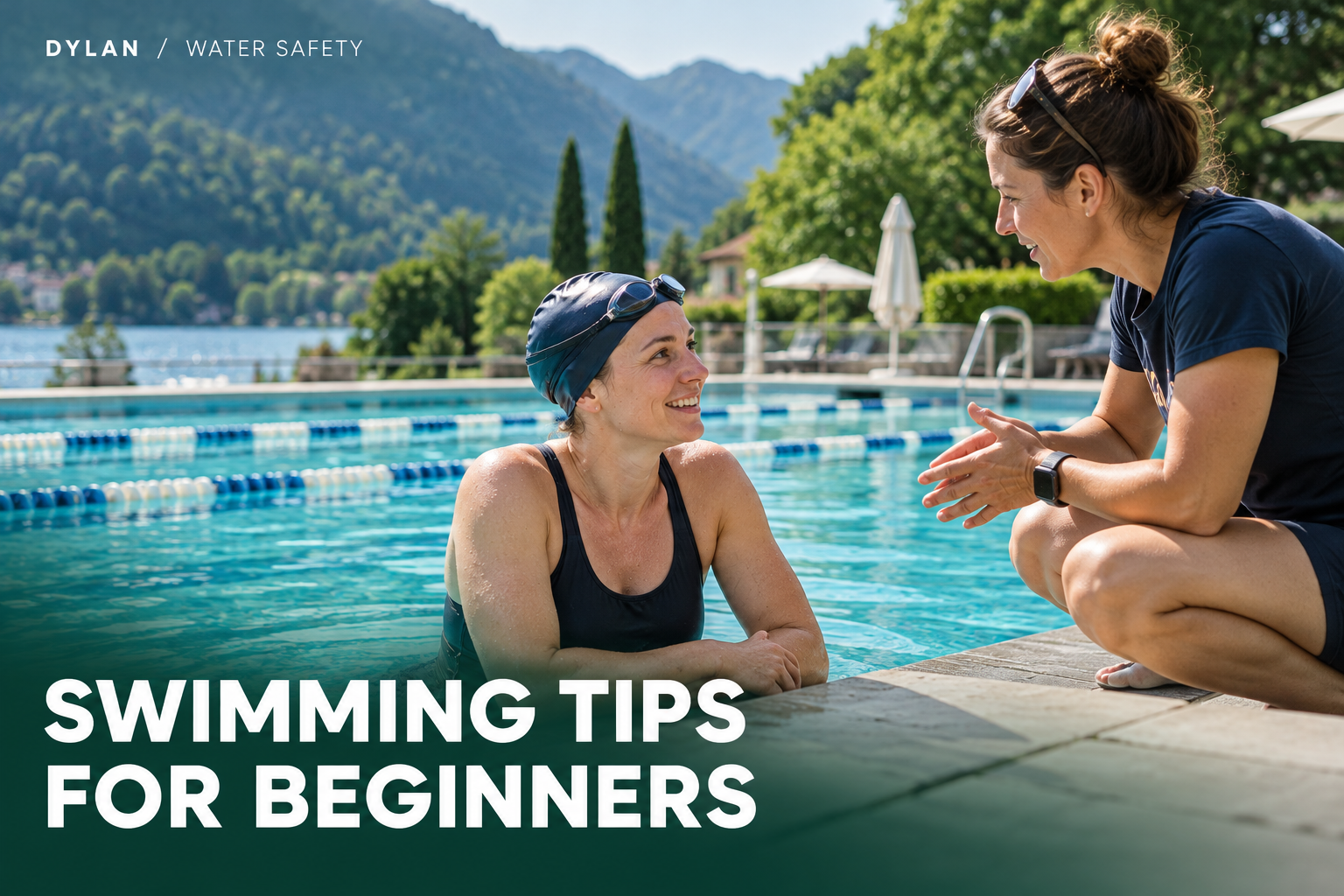
Good swimming tips for beginners should help you make a clear next step. You do not need to arrive at your first lesson knowing a stroke. You do need a suitable learning environment, an honest conversation about your confidence and a plan that matches your current ability. This guide is a starting point for adults learning to swim or returning after a long break.
Choose a lesson that fits your starting point
Before booking, ask the provider how beginners are assessed, how many learners share an instructor and which pool area is used. Explain any previous frightening experience, access needs or health concerns that may affect participation. Ask what equipment to bring and how the instructor adapts an activity when someone feels uncomfortable. A useful first goal might be feeling settled in the teaching area, rather than completing a particular distance.
Learn the skills behind a swimming stroke
Water Safety USA describes water competency as more than forward movement. Entry and resurfacing, breathing control, floating, turning, moving towards safety and exiting all matter. Practise these with qualified supervision. A comfortable pool performance does not establish readiness for cold water, waves, currents or an in-water rescue.
Ask your instructor to explain the purpose of each exercise. For example, changing direction is useful because an exit may be behind you. Learning to pause is useful because continuous effort is not always the best response to uncertainty. Let the instructor choose the progression and depth; never test unfamiliar skills alone.
A practical beginner swimming routine
- Before the session: confirm the lesson location, meeting time and what to bring.
- At the pool: identify the instructor, permitted learning area and nearest exit.
- During practice: explain discomfort early and take the breaks agreed with your instructor.
- Afterwards: write down one skill you understood better and one question for next time.
Keep notes specific. “I need help turning towards the wall” is more useful than “I am bad at swimming.” A short learning record makes the next conversation easier and gives you a realistic view of progress without comparing yourself with another learner.
Make water safety part of the lesson
Choose designated swimming areas with supervision, swim with a buddy and follow the venue’s rules. Avoid breath-holding competitions and hyperventilation. Tell the instructor before changing depth or trying an activity you have seen online. Learning to swim is an ongoing process; it is not a promise that every water setting will be suitable.
Frequently asked questions
How quickly should a beginner learn to swim?
There is no useful deadline that fits everyone. Ask for an individual progression based on confidence, access needs and demonstrated skills.
Should I practise outside my lessons?
Ask your instructor which activities are appropriate and what supervision is needed. Do not turn a suggested exercise into an unsupervised test.
Sources and further learning
Educational reading from DYLAN. This article does not replace swimming lessons, rescue training or CPR certification. In an emergency, contact local emergency services. Cover image: AI-generated editorial illustration, not a technique demonstration.