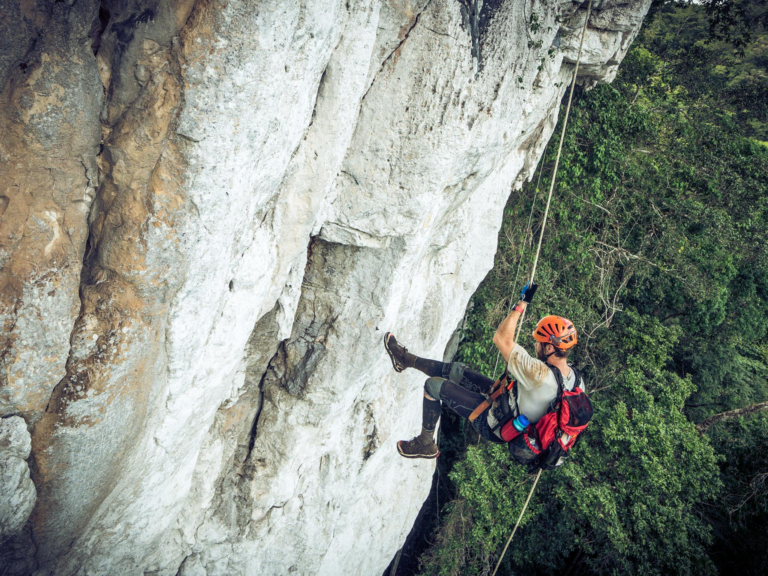
Rock Climbing
03: Prepare fingers with gradual loading
Moving your hands is only the start. Build climbing load gradually on easy terrain with generous holds and reliable footholds.

Practical climbing guide 03 of 08. Moving your hands is only the start. Build climbing load gradually on easy terrain with generous holds and reliable footholds.
Use this preparation guide alongside qualified instruction. Rope-system checks are for trained climbers and belayers; beginners need instructor supervision.
Start without load
Open and close the hands slowly and notice whether any finger feels painful or restricted. This is a comfort check, not proof that your tendons are ready for a hard pull. Gentle hand movement does not replace a gradual on-wall warm-up.
Build through easy climbing
Once equipment and partner checks are complete, select an easy supervised climb with generous handholds. Keep substantial weight on your feet and use a comfortable grip. Finish before your forearms are exhausted, rest and choose another easy line. Progress only while the movement feels controlled. Do not compare your warm-up grade with another climber’s; a route that is easy for them may load your fingers heavily.
Avoid turning preparation into a strength test
For a beginner, maximal hangs, tiny edges, one-finger pockets and explosive pulls are poor starting points. Hangboard loading needs an appropriate progression and instruction, especially with a history of finger pain. You do not need to demonstrate finger strength before your first climbing session. Ask your coach to select holds and movement that suit your current ability.
Use a clear stop rule
If you feel a sudden sharp pain, hear a pop associated with pain, or notice swelling, end the loading rather than repeatedly testing the finger. Tell the instructor and seek medical assessment when appropriate. After a long rest between climbs, return to easier movement before another demanding attempt.
Ready to continue?
Grip feels comfortable; movement stays smooth without straining.
Stop and reassess
Stop for sharp or localised finger pain, a sudden pop or swelling. Do not tape over symptoms and keep climbing.
References & demonstrations
DYLAN editorial preparation series. Updated October 2026. Exercise examples should be adjusted to your ability; this is not a medical rehabilitation plan.