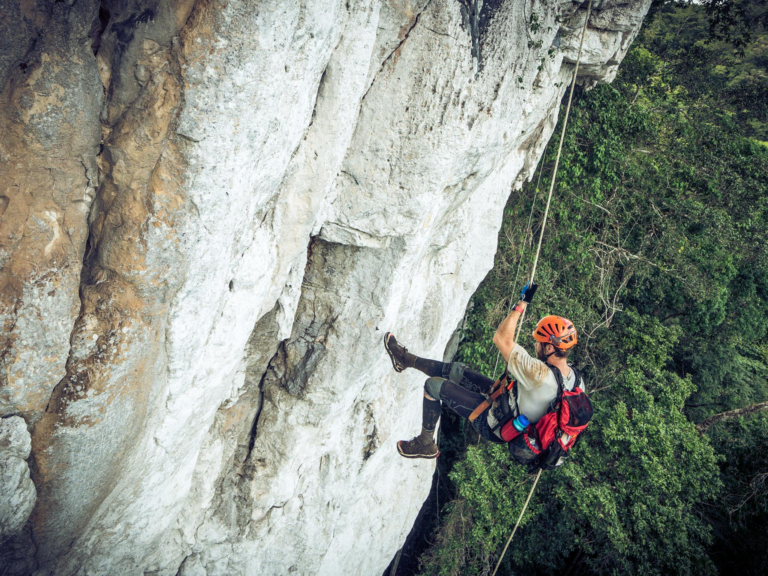
Rock Climbing
07: Agree calls & protect the climbing area
Before climbing, agree how you will communicate and who is responsible for protection. Keep attention on the climber throughout.

Practical climbing guide 07 of 08. Before climbing, agree how you will communicate and who is responsible for protection. Keep attention on the climber throughout.
Use this preparation guide alongside qualified instruction. Rope-system checks are for trained climbers and belayers; beginners need instructor supervision.
Agree meaning before leaving the ground
Ask your instructor which calls your venue uses and rehearse a complete exchange together. Names help identify who is speaking when several parties are nearby. Agree what means stop and what request must be acknowledged before lowering. Wind and distance can make shouting unreliable, so plan a communication method suitable for the actual route.
Keep belaying a single task
Only belay after appropriate instruction and the required competence check. Keep control of the brake-side rope and use the technique required by the device manufacturer. Assisted braking is not hands-free protection. Put the phone away, avoid distracting conversation and stay aware of the climber and rope. Ask for instruction on weight differences, positioning and any additional equipment your situation requires.
Treat uncertainty as a stop signal
If you cannot tell who called, or the message is incomplete, keep protecting the climber and clarify. Silence is not a command to stop belaying. Do not make an unplanned transition at the anchor because you think your partner expects it. Follow the procedure you were taught and the plan agreed on the ground.
For bouldering, protect the landing space
There is no rope belayer in bouldering. Keep mats clear of bottles, bags and people; stay out of active fall zones and avoid overlapping lines. Ask staff to teach landing and downclimbing for their wall. A padded surface does not eliminate injury risk. These habits apply during warm-up climbs as well as hard attempts.
Ready to continue?
Both partners understand the signals and can hear or use an agreed alternative.
Stop and reassess
If a call is unclear, maintain protection and clarify. Never remove someone from belay because you assume they have finished.
References & demonstrations
- Petzl — Communication when climbing
- Petzl — Good belaying practices
- Crux Climbing Center — Bouldering orientation
DYLAN editorial preparation series. Updated October 2026. Exercise examples should be adjusted to your ability; this is not a medical rehabilitation plan.