Skiing
02. Ski Gear for Beginners: Fit, Layers and Daily Checks
Ski gear for beginners should fit the person and the conditions. Start with a professional rental fitting, then organise clothing so you can stay dry, move freely and adjust warmth during the day.
DYLAN / PRACTICAL SKIING GUIDES
Ski gear for beginners should fit the person and the conditions. Start with a professional rental fitting, then organise clothing so you can stay dry, move freely and adjust warmth during the day.
For beginner alpine skiing on open, managed resort slopes. Use these notes alongside a qualified instructor; they are not a substitute for an on-snow lesson.
1. Make the rental fitting a conversation
Bring the socks you will ski in and tell the technician that you are a beginner. Give accurate height, weight, age and ability information when asked. Explain any previous boot problems. The technician needs to check equipment compatibility and set up the bindings for you; do not copy another skier’s settings or follow an online adjustment chart.
Ask staff to demonstrate stepping into and releasing the equipment in the designated safe area. Confirm how skis should be carried, parked and returned. If anything feels different after a fall or a release, take it back for inspection rather than repeatedly forcing it to work.
2. Check boot comfort before leaving the shop
A ski boot should hold the foot securely, but sharp pain, tingling or numbness needs attention. Stand and gently flex as the fitter directs. Describe where pressure occurs instead of simply requesting a larger size. Keep trouser fabric out of the boot and use one smooth pair of appropriate socks, rather than adding layers that create folds.
Recheck comfort after your first short practice. Do not tighten buckles harder to compensate for a poor fit. If cold feet accompany numbness or painful pressure, stop and ask for help. Rental fitting is part of the day, not a hurdle to rush through.
3. Build a clothing system you can adjust
For the question “what to wear skiing”, think in functions: a base layer that manages moisture, a middle layer that provides insulation and an outer layer that blocks wind and sheds snow. Wool or synthetic base layers are practical options; cotton next to the skin tends to stay wet. Adjust insulation to conditions and effort rather than wearing the maximum thickness by default.
Use weather-resistant gloves or mittens and close gaps at cuffs. Keep a dry spare where practical. During a warm indoor break, open or remove outer layers so you do not soak the layers underneath with sweat. Put protection back on before returning outside.
4. Check vision, head protection and loose items
Choose a correctly fitted snow-sports helmet and follow its manufacturer’s instructions. Check helmet and goggles together: your view should be clear and the fit should not create painful pressure. Inspect equipment after an impact and follow the replacement advice. A helmet does not make excessive speed or unsuitable terrain safe.
Secure the phone, pass and keys in zipped pockets. Keep dangling straps and loose clothing away from lift machinery. Carry only what you need for a resort session, and ask the lift attendant how a bag must be handled. Finish by checking gloves, eyewear and fastenings before joining the lesson.
Your next-session checklist
- Have a qualified ski technician fit the boots, skis and compatible bindings; give accurate information about your size and ability.
- Wear one suitable pair of ski socks and check that boots are secure without numbness or sharp pressure.
- Use moisture-managing base layers, an insulating mid layer and a weather-protective outer layer; check helmet and goggle fit together.
Ready check: You can flex and move comfortably, see clearly through the goggles, and identify the rental desk to return to if fit or equipment changes.
Stop and reassess: Return to the technician for pain, numbness, damaged equipment or a binding problem. Do not solve these by changing binding settings yourself.
Common questions
Should a beginner buy skis immediately?
Rental equipment lets you learn what fits and what your instructor recommends before committing to a setup. Confirm exactly what the rental package includes.
Can I adjust my own ski bindings?
For this beginner guide, have a qualified ski technician inspect and adjust the bindings. Do not treat a number printed on a binding as a setting to copy.
Sources and further learning
Published 26 October 2026. Editorial preparation notes compiled from the resources above; no personal coaching or medical assessment is implied.
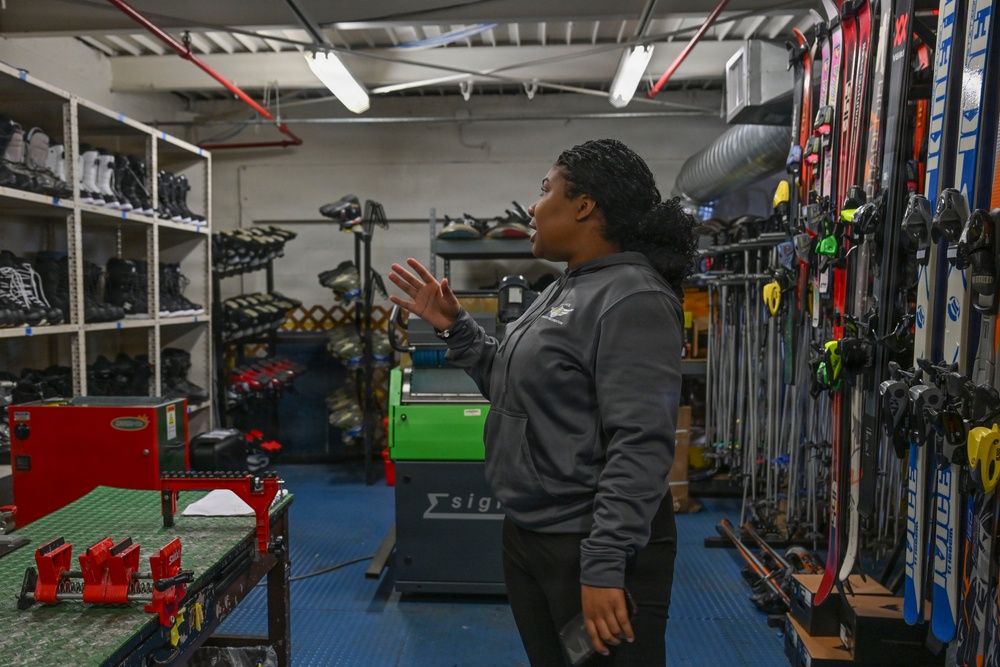
Winter-equipment rental preparation. Photo: Geneva Nguyen / U.S. Air Force, public domain. Photo source.
Explore all 6 skiing guides ↗ · Skiing BLOG ↗
Continue learning: 03. Ski Warm-Up Exercises and a Balanced Beginner Stance ↗