Swimming Safety
Reach or Throw, Don’t Go: Water Rescue Safety for Bystanders
Learn safer ways to help someone in water: raise the alarm, call for trained assistance and understand reaching or throwing help from shore.
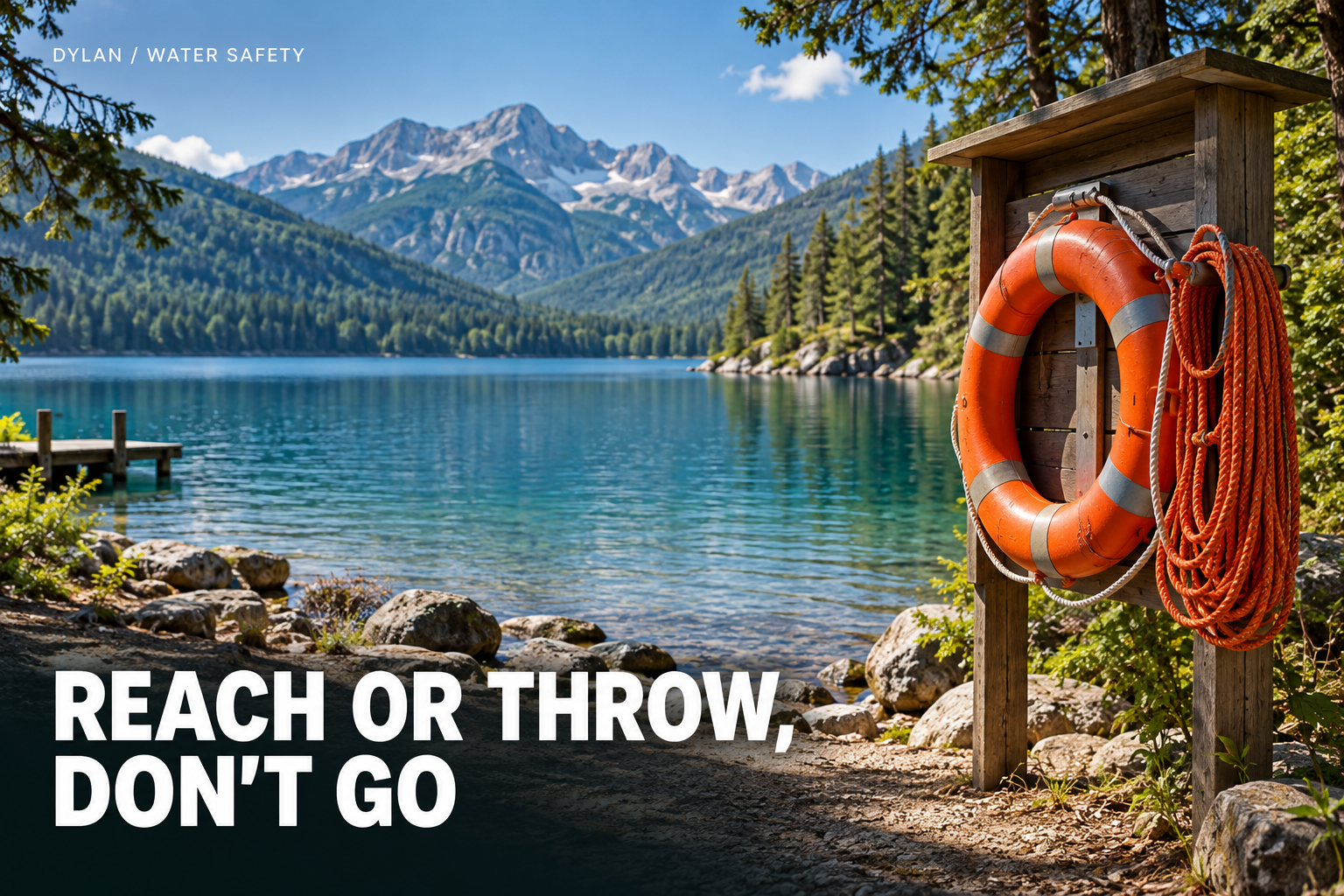
Water rescue safety starts with a difficult but essential decision: helping must not put another person in danger. If you notice someone struggling, alert a lifeguard and call local emergency services immediately. For an untrained bystander, the American Red Cross message “reach or throw, don’t go” provides a useful starting point for understanding help from land.
Raise the alarm and make the situation clear
Call for trained help promptly. Give the location as accurately as you can and explain what you can see. If other people are present, ask a specific person to make the emergency call while someone keeps the swimmer in sight. Follow the dispatcher’s directions. Do not delay calling while trying to decide whether the situation looks dramatic enough.
Understand reaching and throwing assistance
From a secure position on land, suitable reaching equipment may help someone close to the edge; throwing a flotation aid may help someone further away. Do not put yourself where you can slip, be pulled in or be struck by waves. Do not enter the water to attempt an untrained rescue. Practical instruction is the right place to learn equipment use and assess the limits of a reaching or throwing assist.
Learn the location before an emergency
During an ordinary visit, notice where the lifeguard station and public rescue equipment are located. Read the equipment instructions without removing or obstructing it. Check how the site identifies its access points. “Beside the north entrance, near the numbered rescue station” is easier to communicate than “somewhere by the lake.” Never practise with public emergency equipment unless the site operator has arranged it.
Useful roles for people who stay on shore
A bystander does not need to invent an in-water rescue to be useful. One person can call, another can keep pointing towards the person in trouble, and another can guide arriving responders from the entrance. Keep the access route clear. Follow the lifeguard or emergency dispatcher rather than competing with other bystanders’ suggestions.
Discuss this division of tasks with your regular swimming group before an outing. The conversation should be short enough to remember and specific enough to use. Avoid assigning a role that depends on a person having training they do not actually possess.
After the person reaches land
Let trained responders direct care. If the person is unresponsive or not breathing normally, tell emergency services immediately and follow their instructions. CPR and AED use should follow your training and dispatcher guidance. A suspected drowning incident needs medical assessment even when the person initially appears to recover.
Frequently asked questions
Does being a strong swimmer make me a trained rescuer?
No. Swimming ability and rescue competence are different. Rescue training includes decisions, equipment and practical skills that ordinary swimming lessons may not cover.
What can I do now?
Book recognised water-safety and first-aid training, learn the emergency arrangements at the places you visit and review the official guidance below.
Sources and further learning
Educational reading from DYLAN. This article does not replace swimming lessons, rescue training or CPR certification. In an emergency, contact local emergency services. Cover image: AI-generated editorial illustration, not a technique demonstration.