Hunting & Field Adventures
06. Prepare for delays, emergencies and return
The emergency plan starts before departure and ends when everyone is accounted for. Know how to report a location, stay together, protect against exposure and tell your contact that the day has finished.
DYLAN / PRACTICAL HUNTING & FIELD GUIDES
The emergency plan starts before departure and ends when everyone is accounted for. Know how to report a location, stay together, protect against exposure and tell your contact that the day has finished.
1. Practise the call before you need it
Save the correct emergency number for the destination; numbers and coverage differ between countries and regions. Know how to read your location from a map or navigation device and how to describe the nearest landmark, access point and route. Test devices before leaving and plan around gaps in mobile reception.
If an emergency occurs, give the location, what happened, the number of people, the nature of any injury and immediate hazards. Follow the dispatcher’s directions. Conserve power and keep the device available for a return call. Where appropriate, carry a suitable emergency communication device and learn its operation in advance.
2. If your location becomes uncertain, stop
Pause in a safe place rather than walking faster in the hope of recognising something. Keep the group together, assess the map and recent landmarks, and use the communication plan. Do not send individuals away on an unplanned search. If you cannot safely resolve the situation, seek help early.
After giving rescuers your location, stay there unless an immediate danger requires movement, and communicate any necessary change when possible. Use available shelter and layers to limit exposure, conserve energy and make yourself visible or audible with appropriate signalling equipment. A phone is useful but cannot guarantee reception or a rapid rescue.
3. Respond within your training
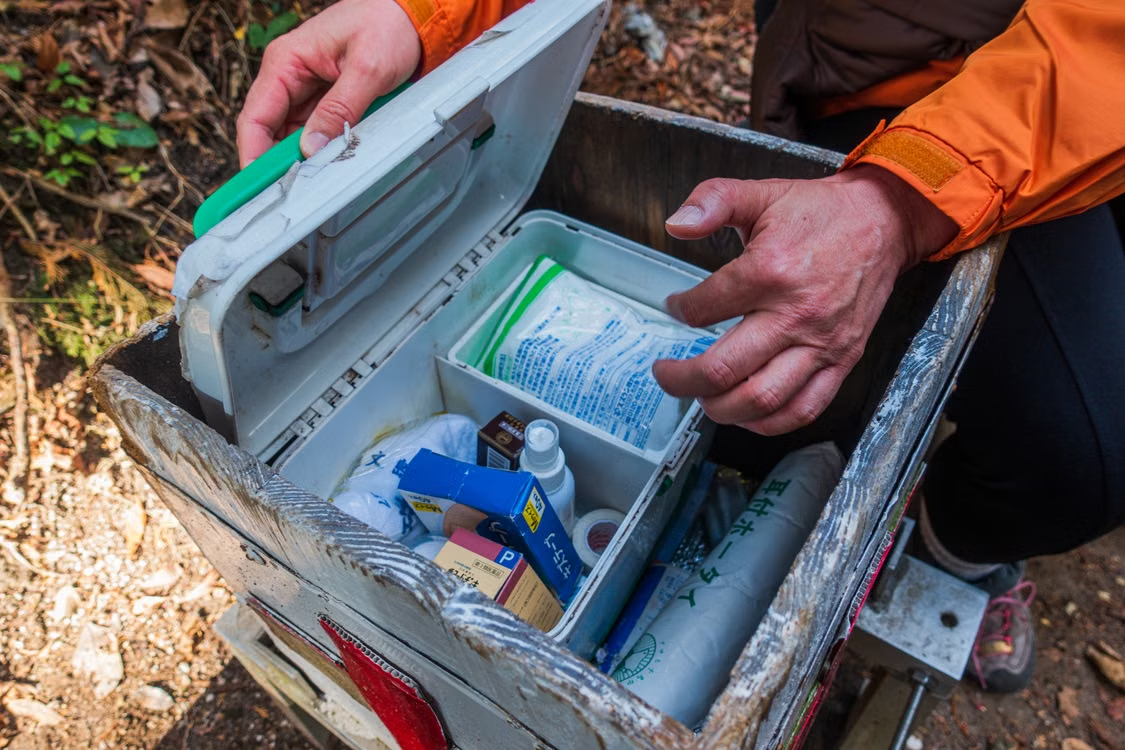
First make sure the scene does not expose you or the group to another hazard. For serious injury or illness, contact emergency services promptly. Keep the person protected from the weather, reassure them and avoid unnecessary movement after a significant fall. Use first-aid skills you have been taught and follow dispatcher guidance.
A first-aid kit is not a substitute for training. Arrange a relevant outdoor first-aid course, review personal medical needs before departure and know where supplies are carried. Do not attempt an unfamiliar technical rescue, dangerous water crossing or improvised descent to reach someone.
4. Close the plan and learn from the day
Account for every person at the end, then notify the trusted contact so they do not begin an unnecessary overdue response. Store and transport equipment safely under local rules and manufacturer instructions. Dry and inspect clothing and supplies, replace used first-aid items and record damaged equipment before the next outing.
After exposure to grass or woodland, inspect your body, clothing and gear for ticks and follow current public-health advice. Discuss near misses without blame: where did the route take longer, communication fail or equipment become difficult to use? Adjust the next plan rather than treating a lucky outcome as proof that the method was sound.
Before you continue
The group can give its location and route, identify emergency access and explain who will call for help and who will stay with the casualty.
Stop and reassess: End the outing for injury, confusion, marked weakness or worsening conditions. Do not turn an emergency into a second casualty through an improvised rescue.
Sources & further learning
- Outdoor emergency plan — National Park Service
- Trip planning — National Park Service
- Preventing tick bites — CDC
- Preparation and survival — Texas Parks & Wildlife
Reviewed 26 October 2026. Sources include US public agencies; legal requirements differ by location. These preparation notes complement practical hunter education and local instruction.